Cute Girl in Animals Costume Clipart – A Designer’s Go-To Asset
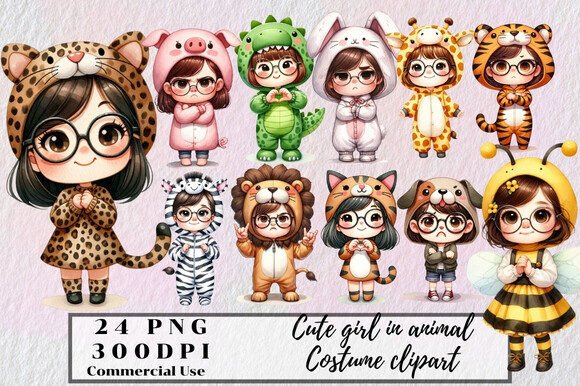
If you have ever scrolled through endless stock illustration libraries looking for something that actually feels fresh and usable, you already know the struggle. Most clipart sets feel either too generic or too niche. That is where Cute Girl in Animals Costume Clipart stands apart. This collection does not just give you a single character variant. It gives you a whole cast of playful, expressive scenes built around a charming central character dressed in different animal costumes. From bunny ears and bear hoods to cat whiskers and fox tails, each illustration carries a distinct personality while keeping a consistent visual thread. That consistency is exactly what makes the set valuable for both quick mockups and polished final work.
The art style leans toward soft, rounded lines and warm color palettes. Think gentle pastels mixed with enough contrast to keep the character legible at smaller sizes. The girl’s expressions range from cheerful to curious to gently mischievous, which gives you flexibility depending on the tone of your project. Background elements are minimal but intentional, often featuring a subtle texture or a simple shape that frames the character without pulling focus. This balance between detail and simplicity is rare in ready-to-use clipart. It makes the set feel less like a pre-made add-on and more like a custom illustration that fits right into your layout.
Where This Clipart Collection Shines in Real Projects
The most obvious place to drop these graphics is children’s content, but that only scratches the surface. I have seen designers use this clipart in everything from social media graphics for lifestyle brands to sticker packs for small-batch stationery lines. The animal costume theme gives you a built-in narrative hook. A girl dressed as a fox can sit on a book cover about cleverness. A girl in a bunny costume can anchor an Easter campaign without feeling forced. The versatility comes from the fact that the costumes are recognisable but not overly specific to a single holiday or season.
For brand identity work, especially with startups or small businesses targeting young families, this clipart can function as a mascot or recurring visual cue. Imagine a children’s clothing brand using the bear-costume version on their hang tags and website hero section. The same illustration can carry across packaging design, email headers, and even web design elements like 404 pages or onboarding illustrations. Because the art style is clean and modern, it does not clash with other design assets like icons, patterns, or handwritten font overlays.
Publishers and bloggers also get solid mileage out of this set. If you run a parenting blog or a lifestyle magazine, having a consistent character that appears across articles creates a recognisable voice. I have seen editorial pieces where the clipart appears in the featured image, then reappears as a small accent in the sidebar or between sections. That kind of visual consistency builds trust and keeps readers engaged without requiring a custom illustrator on retainer. For editorial design in digital newsletters or printed zines, the clipart adds warmth without overwhelming the text.
How Visual Consistency Shapes Perception and Engagement
One underrated aspect of using a unified clipart set like this is the effect it has on brand perception. Audiences pick up on visual cues faster than they process written information. When they see the same character style across a website, a product label, and a social media post, their brain registers that as professionalism and intentionality. Even if you are a solo creator or a small business owner working on a tight budget, using a cohesive clipart set makes your work feel like it came from a team with a clear vision.
Readability also benefits from the way these illustrations are constructed. The character is drawn with enough weight and contrast to sit comfortably next to text. If you place the fox-costume version beside a headline set in a sans serif font, the illustration does not compete for attention. Instead, it supports the hierarchy. The soft curves of the clipart balance the clean lines of the type, creating a layout that feels approachable. For projects that rely on modern typography, this kind of complementary relationship between image and text is gold.
Brand recognition improves when you establish a visual anchor. The girl in animal costume becomes that anchor. Over time, your audience starts associating the character with your content or products. This is especially effective for social media graphics where users scroll quickly. A consistent character style makes your posts instantly identifiable in a crowded feed. Pair the clipart with a premium font for your captions or callouts, and you have a visual system that looks deliberate and polished.
Practical Guidance for Choosing and Using This Clipart
Before you drop the clipart into your project, take a moment to evaluate fit. Ask yourself what role the character will play. Is it the main visual focus, or is it a supporting accent? If it is the main focus, choose a costume variant that reinforces your message. The cat costume leans playful and curious, which works well for content about exploration or learning. The bear costume feels warm and protective, making it a natural fit for safety products, bedtime content, or family-oriented branding.
If you are a blogger or content creator, I recommend using the clipart as a recurring element across your posts rather than a one-off illustration. This creates a series feel that encourages readers to explore more of your content. For marketers running campaigns, test different costume variants across A/B versions of ads or landing pages. The same character in a different costume can shift the emotional tone without changing the layout, which is a lightweight way to test audience response.
When it comes to font pairing, this clipart works well with a variety of typefaces. A script font can amplify the whimsical feel if you are designing for invitations or greeting cards. A clean sans serif font keeps the look modern and readable for websites or product labels. If you need a more formal or premium feel, a serif font in the headline adds contrast while the clipart softens the overall tone. Avoid pairing the clipart with another overly detailed illustration or a busy pattern, because the character needs breathing room to maintain its impact.
Readability also means considering size. At very small scales, some of the costume details like whiskers or ear tips may get lost. If you are using the clipart in thumbnails or mobile layouts, test the smallest size you plan to use. Most of the illustrations hold up well at moderate sizes, but the fine details reward those who give the character space. For packaging design, where the image might appear on a small tag or a large box, make sure you have the resolution to scale without pixelation.
Licensing and Commercial Use Considerations
Always review the commercial licensing terms before you ship a product or publish content that features the clipart. Many clipart sets come with standard licenses that cover personal use and limited commercial use, but if you plan to use the illustrations on merchandise, in digital products, or as part of a brand identity, you may need an extended license. This is not about restrictions. It is about making sure you have the rights to use the asset the way your project demands. I have seen small business owners accidentally violate licensing terms because they assumed all clipart is free for any commercial use. Avoid that headache by reading the fine print upfront.
If you are a crafter or hobbyist making items for sale on platforms like Etsy, check whether the license covers printed physical goods. Most sets allow it, but the specifics matter. If you are a designer creating client work, clarify with your client whether the clipart license covers their end use. Some licenses restrict use in logos or trademarks, so if you are building a full brand identity around the character, you may want to commission a custom version instead. For typical graphic design projects like flyers, social posts, or simple packaging, the standard license usually covers you.
Real-World Examples and Observations
I worked with a small organic skincare brand that targets new parents. They used the bear-costume version of this clipart on their product boxes, their website banner, and their email welcome sequence. The character appeared in a simple circular crop next to product photos. That one consistent element tied together their entire visual identity. Customers started referring to the character as the “little bear,” and the brand leaned into it by adding a short story about the bear on their about page. That kind of organic connection does not happen with generic stock photos. It happens because the clipart had enough personality to become a brand touchstone.
Another example: a children’s book author used variants of the clipart as chapter openers and page accents. The book was about animals, so each costume matched the animal discussed in that chapter. The author paired the illustrations with a handwritten font for chapter titles, which gave the whole book a cohesive, handmade feel. Readers commented that the illustrations made the book feel approachable for reluctant readers. That is the power of choosing design assets that serve both aesthetic and functional goals.
For logo design, you likely want something more custom than a clipart set. But for a mascot or secondary logo mark, this clipart can work beautifully. I have seen a bakery use the cat-costume version as a secondary mark on their bags and stickers, paired with a display font for the shop name. The result looked intentional and sweet without being overly cartoony.
Final Thoughts on Making the Most of This Set
The real value of Cute Girl in Animals Costume Clipart lies in its consistency and emotional reach. It gives you a ready-made character that can adapt to different contexts without losing its identity. Whether you are designing a website, building a product line, or creating content for a blog, this set saves you time while elevating the visual quality of your work. The key is to use it intentionally. Pick one or two costume variants that align with your message and use them consistently across touchpoints. That approach builds recognition and trust faster than rotating through unrelated graphics.
Test the clipart with your own brand colors, pair it with fonts that match your tone, and give the character room to breathe in your layouts. When you treat the clipart as a core design asset rather than a background filler, it delivers far more than just decoration. It becomes part of how your audience remembers you.